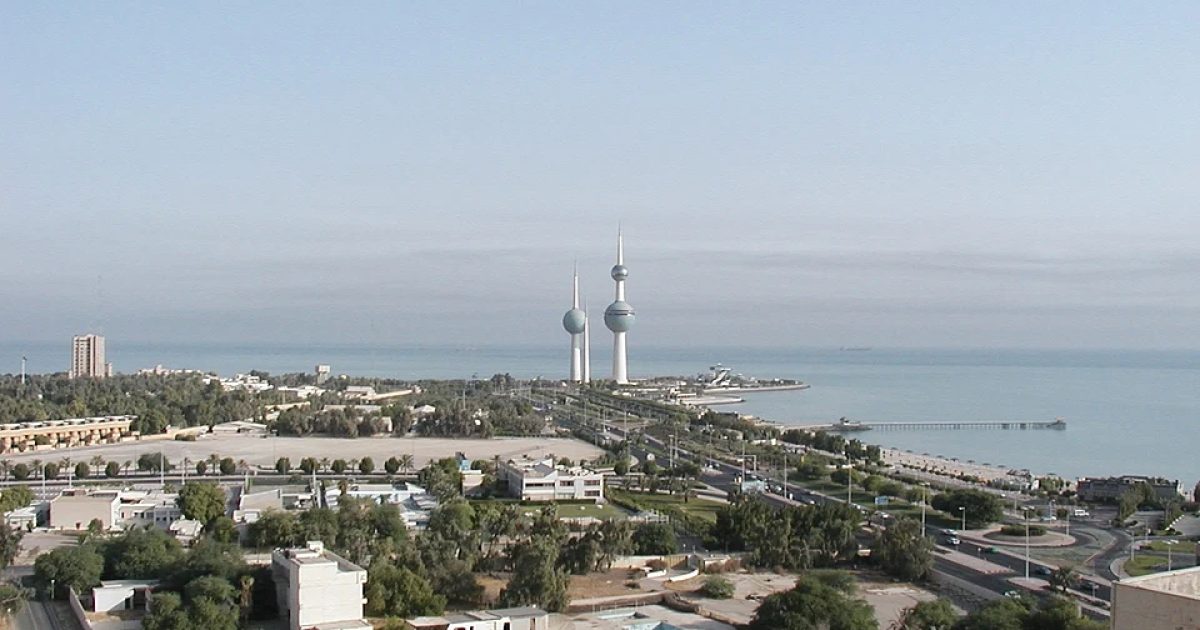
Maritime law is among the oldest and most specialized branches of commercial law, and it holds particular significance for Kuwait — a nation whose history is deeply intertwined with the sea, from the pearl-diving era to its modern status as one of the world's leading oil exporters. The movement of tankers and commercial vessels through Kuwaiti ports makes a robust maritime legal framework indispensable. Kuwait's primary maritime legislation is the Maritime Commerce Law, enacted by Decree-Law No. 28 of 1980, which governs all commercial maritime activities and transactions in the country.
Legal Framework: The Maritime Commerce Law
Decree-Law No. 28/1980 is a comprehensive statute covering the full spectrum of maritime commercial activity. It draws on major international maritime conventions, notably the Brussels Convention of 1924 on the Unification of Certain Rules Relating to Bills of Lading (the Hague Rules) and the Hamburg Rules of 1978 on the Carriage of Goods by Sea. The law addresses ship registration and nationality, maritime liens and mortgages, collision liability, salvage operations, general average, contracts of carriage, and marine insurance. Where the Maritime Commerce Law is silent, Kuwait's Civil and Commercial Procedure Code and general Commercial Code apply as supplementary sources.
Types of Maritime Contracts
Kuwaiti maritime law recognizes several categories of shipping contracts, each with distinct legal characteristics:
- Charter Parties: Agreements under which a shipowner or operator places a vessel — in whole or in part — at the charterer's disposal for the carriage of goods or passengers. These include voyage charters (for a single voyage), time charters (for a specified period), and bareboat (demise) charters, where the charterer assumes full possession and operational control of the vessel.
- Bills of Lading: The cornerstone document of maritime trade, serving three critical functions: a receipt for goods shipped, evidence of the contract of carriage and its terms, and a negotiable document of title to the goods. The carrier is obligated to issue a bill of lading upon the shipper's request after receiving the cargo.
- Contracts of Affreightment: Long-term agreements requiring the carrier to transport specified quantities of goods in successive shipments over a defined period — a structure widely used for oil and bulk commodity exports from Kuwait.
Carrier's Obligations and Liability
The Maritime Commerce Law imposes rigorous obligations on the carrier to protect cargo interests:
- Seaworthiness: The carrier must exercise due diligence before and at the commencement of each voyage to ensure the vessel is seaworthy, properly manned, equipped, and supplied, with holds and cargo spaces fit for the reception and preservation of goods.
- Proper Handling of Cargo: The carrier must load, stow, carry, and discharge goods in a careful and appropriate manner, maintaining proper care throughout the voyage.
- Following the Agreed Route: Deviation from the contractual or customary route is prohibited except to save life or property at sea, or for another reasonable cause.
- Delivery at Destination: The carrier must deliver the goods to the consignee at the agreed port of discharge in the condition in which they were received.
The carrier is liable for loss, damage, or delay from the time of receipt until delivery. However, the law provides a catalogue of defenses, including force majeure, inherent vice of the goods, act or omission of the shipper, fire (unless caused by the carrier's fault), perils of the sea, and acts of salvage.
Shipper's Obligations
The shipper bears corresponding duties under Kuwaiti maritime law. These include accurately disclosing the nature of the goods — especially dangerous, flammable, or explosive cargo — on pain of having the carrier entitled to land or destroy such undeclared goods without compensation. The shipper must also pay the agreed freight, provide all necessary documentation (weight statements, marks, descriptions), and ensure proper packing and labeling suitable for maritime transit.
Limitation of Liability
Consistent with international maritime practice, Kuwaiti law allows the carrier to limit liability for cargo loss or damage to specified maximum amounts, typically calculated per package, unit, or by weight — whichever yields the higher figure. The law also recognizes the global limitation of shipowner liability, permitting owners to cap their aggregate liability for claims arising from a single maritime incident in proportion to the vessel's tonnage. The right to limit liability is forfeited where the damage results from the carrier's personal act or omission committed with intent to cause damage, or recklessly and with knowledge that damage would probably result.
Maritime Liens and Mortgages
The Maritime Commerce Law establishes a specialized regime for security interests in vessels. Maritime liens arise by operation of law and attach to the vessel and its freight to secure specific categories of debt — including court costs, port and lighthouse dues, crew wages, salvage awards, and collision damages. These liens follow the vessel into whichever hands it passes and take priority over maritime mortgages and general statutory liens. A maritime mortgage, by contrast, is a contractual security interest that must be executed in writing and registered in the ship registry to be enforceable against third parties.
Ship Arrest in Kuwait
Ship arrest is one of the most powerful remedies available to maritime creditors. Under Kuwaiti law, a creditor holding a maritime claim may apply to the judge of urgent matters at the Court of First Instance for a conservatory arrest of the vessel. The claim must be maritime in nature, and the vessel must be owned by the debtor at the time the claim arose or at the time of arrest. An arrested vessel is prevented from sailing until the arrest is lifted — either through payment of the debt or the provision of adequate security. Kuwait's adherence to the International Convention Relating to the Arrest of Seagoing Ships (Brussels, 1952) facilitates cross-border enforcement of arrest orders.
Collision and Salvage
The law provides detailed rules for maritime collisions. Liability is apportioned according to fault: where one vessel is solely at fault, it bears the full compensation; where fault is shared, liability is divided in proportion to the degree of fault of each vessel; and where the collision results from force majeure or an unknown cause, each party bears its own loss. For salvage, any person who renders assistance to a vessel or cargo in distress at sea is entitled to a fair reward, assessed by reference to the effort expended, the danger faced by the salvor, the value of the property saved, and the degree of success achieved.
General Average
Kuwaiti maritime law incorporates the ancient principle of general average. A general average act occurs when the master intentionally and reasonably makes a sacrifice or incurs extraordinary expenditure to preserve the vessel and its cargo from a common peril. The resulting loss is apportioned among all parties with an interest in the maritime venture — the shipowner, the cargo owners, and the freight interest — in proportion to the value of their respective property. Contributions are typically assessed under the internationally recognized York-Antwerp Rules, which are incorporated by reference in most maritime contracts.
Marine Insurance
Marine insurance is the financial backbone of maritime commerce. Under Kuwaiti law, a marine insurance contract is an agreement whereby the insurer undertakes to indemnify the assured against losses arising from maritime perils in return for a premium. The principal types of marine insurance policies include:
- Hull Insurance: Covering physical loss or damage to the vessel from maritime perils such as sinking, fire, collision, and storms.
- Cargo Insurance: Protecting goods in transit against loss or damage during the sea voyage.
- Liability Insurance: Covering the shipowner's or operator's civil liability to third parties, including pollution damage, personal injury, and property damage.
- Freight Insurance: Protecting the carrier's interest in freight that may be lost due to a maritime casualty.
Marine insurance contracts are governed by the principle of utmost good faith (uberrima fides), requiring the assured to disclose all material facts relating to the insured risk. Breach of this duty may render the policy voidable.
P&I Clubs
In addition to commercial insurers, Protection and Indemnity (P&I) Clubs play a central role in maritime risk management. These mutual associations of shipowners provide cover for third-party liabilities not ordinarily insured under hull policies — including crew injuries, passenger claims, cargo damage, pollution liability, and general average contributions. The vast majority of vessels calling at Kuwaiti ports carry P&I cover from one of the major international clubs, ensuring substantial financial backing in the event of maritime disputes.
Port Regulations and Kuwait Ports Authority
The Kuwait Ports Authority oversees the operation of Kuwait's major ports — Shuwaikh (the principal commercial port), Shuaiba, Ahmadi (specializing in oil exports), and Doha. The Authority issues regulations governing vessel entry and departure, cargo loading and discharge operations, and navigational safety within Kuwaiti territorial waters. It also levies port dues and tariffs for the use of port facilities. Shipowners and their agents must comply with these regulations, with violations subject to administrative and financial penalties.
Maritime Arbitration
Arbitration is the preferred mechanism for resolving maritime disputes internationally, valued for its speed, confidentiality, and the technical expertise of arbitrators. Most charter parties and carriage contracts contain arbitration clauses referring disputes to specialized forums, most commonly the London Maritime Arbitrators Association (LMAA). Kuwait's Judicial Arbitration Law (Law No. 11 of 1995, as amended) governs arbitration domestically, and Kuwait's accession to the New York Convention of 1958 on the Recognition and Enforcement of Foreign Arbitral Awards facilitates the enforcement of foreign maritime arbitration awards before Kuwaiti courts, subject to compliance with prescribed conditions.
Practical Guidance for Shipping Disputes
When a maritime dispute arises in or involves Kuwaiti ports, the following steps are advisable:
- Immediate Documentation: Preserve all evidence — survey reports, photographs, master's reports, and sea protests — as promptly as possible.
- Timely Notification: Notify insurers and P&I clubs without delay, and adhere strictly to contractual and statutory time limits for filing notices and claims.
- Expert Engagement: Appoint qualified marine surveyors to assess damage and prepare the technical reports essential for any claim or defense.
- Limitation Periods: Be alert to the prescription periods applicable to maritime claims, which are generally shorter than those for ordinary civil and commercial actions.
- Jurisdiction and Arbitration Clauses: Review the dispute resolution provisions in the contract to identify the competent forum — whether Kuwaiti courts, a foreign court, or an arbitral tribunal.
Conclusion
Kuwait's Maritime Commerce Law provides a comprehensive legal framework governing all facets of commercial maritime activity, from vessel registration through to dispute resolution. As international trade through Kuwaiti ports continues to expand and the country's logistics sector develops, familiarity with this body of law is essential for protecting the rights and interests of all stakeholders in the maritime industry.
Maritime disputes are technically and legally complex, involving an interplay of national law, international conventions, and established maritime custom. If you are facing a legal issue related to maritime carriage, marine insurance, ship arrest, or any other aspect of maritime law, the team at Yumnaak Law Firm includes lawyers experienced in maritime and commercial law who are ready to provide specialized legal counsel and to advocate for your interests with professionalism and expertise.