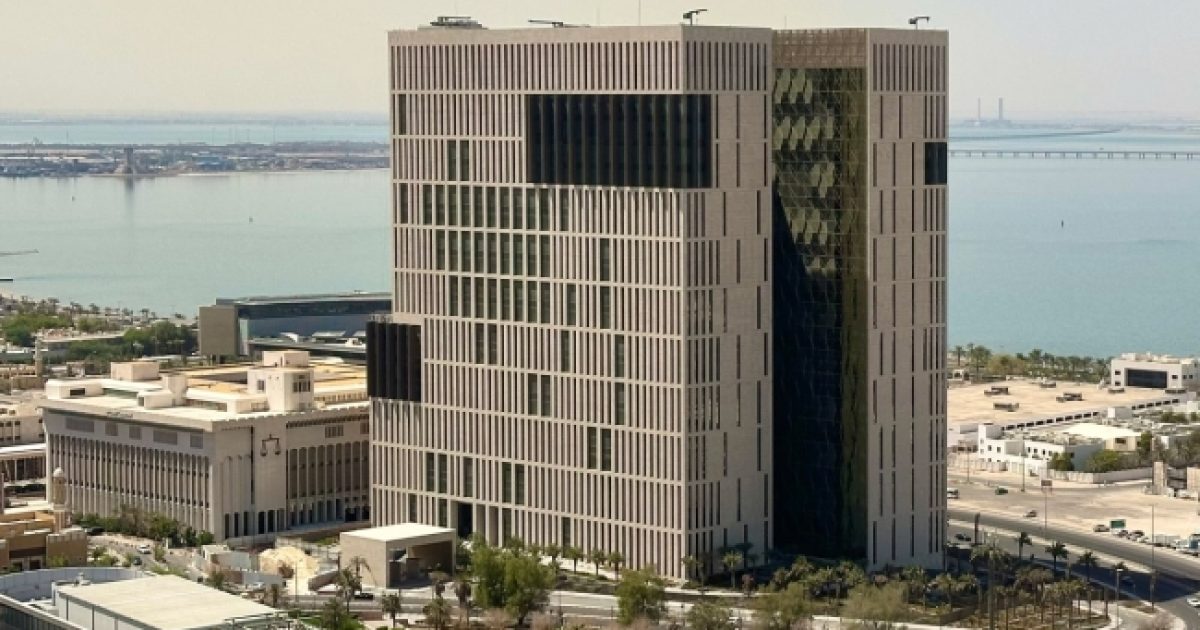
Liability for things — known in Arabic legal terminology as al-mas'uliyyah 'an fi'l al-ashya' — is one of the most significant forms of civil liability under Kuwaiti law. Rooted in the principle that those who control and benefit from things should bear the risk of harm those things cause, this area of law imposes a form of strict liability on custodians without requiring proof of personal fault. The Kuwaiti Civil Code (Decree-Law No. 67 of 1980) addresses this liability primarily in Articles 243, 244, and 245, establishing a comprehensive framework that balances the protection of injured parties with the rights of custodians. This article examines the full legal framework and its practical applications.
Legal Foundation: Articles 243, 244, and 245
Article 243 of the Kuwaiti Civil Code establishes the general principle: the custodian of a thing is liable for harm that thing causes to others. This liability rests on a presumption of fault that cannot be rebutted by simply proving the absence of negligence — the custodian must instead demonstrate an external cause to escape liability.
Article 244 addresses the specific case of building collapse. The owner of a building is held liable for damage resulting from its total or partial collapse when such collapse is attributable to the building's age, a defect in its construction, or neglect in its maintenance.
Article 245 deals with mechanical devices and similar equipment, confirming that the custodian of such devices bears liability for harm they cause. This provision reflects the heightened risks associated with machinery and motor-powered equipment.
The Concept of Custody (Al-Hirasah)
The concept of custody is central to this area of law. Custody is not mere physical possession; it is defined as effective control over the use, direction, and supervision of a thing for one's own account. The following principles govern the determination of who qualifies as a custodian:
- Owner as presumptive custodian: The owner of a thing is presumed to be its custodian. This presumption stands unless the owner proves that custody has transferred to another person, such as a lessee or borrower who exercises independent control over the thing.
- Transfer of custody: Custody transfers when effective control passes from the owner to another party. A car rental company, for example, may cease to be the custodian once the renter takes sole control of the vehicle.
- Employees and agents: A person who uses a thing under the direction and supervision of another (such as an employee operating equipment under employer instructions) is generally not considered the custodian — custody remains with the employer or principal.
- Unauthorized possessors: A thief or other unauthorized possessor who gains actual control of a thing becomes its custodian, thereby assuming liability for harm it causes.
The Kuwait Court of Cassation has consistently held that custody is determined by actual control, not legal title alone, and that the burden of proving transfer of custody falls on the owner who claims it.
Conditions for Establishing Liability
Three conditions must be met for custodian liability to arise:
- The thing must be under custody: The thing that caused harm must have been subject to the custodian's effective control at the time of the incident. If the thing had escaped the custodian's control due to force majeure or the act of a third party, liability does not attach.
- Damage to a third party: The injured party must have suffered actual harm, whether material (bodily injury, property damage, lost earnings) or moral (pain and suffering, disfigurement, emotional distress).
- Causal connection: The damage must result from the active involvement of the thing in causing the harm. Importantly, the thing need not be inherently dangerous or defective — it is sufficient that it played an active role in producing the injury.
Crucially, the injured party is not required to prove fault on the part of the custodian. Fault is presumed once the thing's involvement in causing the harm is established. This distinguishes liability for things from ordinary fault-based tortious liability, where the plaintiff must prove negligence.
Types of Things Covered
The scope of this liability extends to a broad range of physical objects:
- Motor vehicles: Traffic accidents are the most common application. The owner or driver — depending on who holds custody — is liable for harm caused by the vehicle. This connects directly to Kuwait's compulsory motor vehicle insurance regime.
- Machinery and mechanical equipment: Factory machinery, construction equipment, elevators, cranes, and medical devices all fall within Article 245. Employers bear particular responsibility for workplace equipment injuries.
- Buildings and structures: Under Article 244, building owners are liable for harm from total or partial collapse caused by age, defects, or maintenance neglect. The owner may have recourse against the contractor or architect under the decennial warranty for construction defects.
- Animals: The keeper of an animal is liable for harm it causes, whether the animal was under direct supervision or had strayed.
- Electrical installations and utilities: Wiring, gas pipes, water networks, and similar infrastructure are covered when their malfunction causes harm.
- Hazardous materials: Custodians of chemicals, explosives, flammable substances, and similar dangerous materials face heightened scrutiny given the inherent risks these items present.
Building Collapse: A Special Regime
Article 244 creates a distinct liability regime for building collapse with several notable features. First, liability attaches to the building's owner rather than its custodian — a departure from the general rule of Article 243. Second, the owner's liability arises when collapse results from the building's age, construction defects, or maintenance neglect. Third, the owner who compensates the injured party may seek recovery from the contractor or architect if the collapse was due to design or construction flaws, within the framework of the decennial guarantee. Fourth, liability covers not only total collapse but also partial deterioration — falling facade elements, cracking walls, stairway failures, and similar structural failures.
Defenses Available to the Custodian
Although liability is strict in the sense that the custodian cannot escape it by merely proving absence of fault, the law provides specific defenses based on establishing an external cause:
- Force majeure: An unforeseeable and unavoidable event, such as an extraordinary natural disaster, that constitutes the sole cause of the harm. The event must be both unpredictable and irresistible.
- Victim's fault: If the injured party's own conduct caused or contributed to the harm, the custodian may be fully exonerated (if the victim's fault was the sole cause) or the compensation may be reduced proportionally (if both the thing and the victim's conduct contributed).
- Act of a third party: If the harm was caused by an intervening act of someone other than the custodian or the victim, and this third party is not someone for whom the custodian is legally responsible, the custodian may invoke this defense.
- Proving the external cause generally: The custodian may defeat the claim by establishing that the harm is attributable to a cause entirely beyond his control, thereby breaking the chain of causation.
It bears emphasis that the custodian's proof of having exercised all reasonable precautions is insufficient. The defense requires demonstrating a specific external cause — not merely the absence of personal fault.
Government Liability for Public Infrastructure
The liability framework extends to government entities as custodians of public facilities. The State may be held liable for harm caused by deteriorating public roads, fallen lamp posts, broken sidewalks, malfunctioning sewage systems, and similar infrastructure failures. Kuwaiti courts have held government agencies liable in numerous cases involving neglected maintenance of public facilities or failure to implement adequate safety measures.
Insurance and Liability for Things
Insurance plays a critical role in the practical operation of this liability regime:
- Compulsory motor vehicle insurance: Kuwaiti law requires vehicle owners to obtain third-party liability insurance, giving injured parties a direct action against the insurer.
- Professional liability insurance: Professionals such as physicians and engineers commonly obtain coverage for liability arising from things under their custody.
- General civil liability insurance: Commercial and industrial enterprises typically insure against liability for harm caused by their premises and equipment.
Assessment of Damages
Damages for harm caused by things follow the general compensatory principles of Kuwaiti civil law. Recoverable damages include material losses (medical expenses, treatment costs, property repair or replacement, lost income), moral damages (pain and suffering, disfigurement, loss of enjoyment of life), and consequential damages suffered by close relatives of the primary victim. Courts exercise broad discretion in quantifying damages, considering the severity of harm, the victim's circumstances, and the context of the incident.
Court of Cassation Jurisprudence
The Kuwait Court of Cassation has established several foundational principles in this area:
- Custodian liability rests on a presumption of fault that cannot be rebutted except by proving an external cause.
- Custody is determined by effective control, not ownership alone; the owner is the presumptive custodian unless transfer of custody is proven.
- The thing's involvement in causing harm suffices — the thing need not be defective or inherently dangerous.
- Proof of an external cause must be definitive and specific; mere possibility of an outside factor is insufficient.
- Contributory fault of the victim reduces but does not necessarily eliminate the custodian's liability.
Practical Guidance
For custodians and property owners, prudent measures include performing regular maintenance and inspections, maintaining documented maintenance records, securing appropriate liability insurance coverage, posting clear warning signs near potential hazards, and complying with all applicable safety regulations.
For injured parties, recommended steps include documenting the incident immediately through photographs, reports, and witness statements; obtaining a detailed medical report describing all injuries; identifying the custodian of the thing that caused the harm; and filing the claim within the applicable limitation period to preserve the right of action.
Conclusion
Liability for things under Kuwaiti civil law represents an important safeguard for the protection of injured parties, relieving them of the burden of proving the custodian's fault and requiring only proof that the thing played an active role in causing the harm. At the same time, the law preserves the custodian's right to escape liability by establishing an external cause, achieving a fair balance between victim protection and the interests of those who control things.
Navigating liability for things disputes requires specialized legal expertise — whether identifying the proper custodian, establishing causation, or quantifying appropriate compensation. If you have suffered harm caused by a thing in another's custody, or if you face a liability claim as a custodian, we encourage you to consult with Yumnaak Law Firm for tailored legal advice that accounts for the specific circumstances of your case and ensures the strongest possible protection of your rights.