Introduction: When Parents Need Their Children
Kuwaiti family life rests on deeply held values, and respect and care for one's parents stand at the top of them. Most fathers and mothers are looked after by their children without the question of financial support ever reaching a courtroom. Yet practice shows a steady number of cases where it does: a retired father whose pension no longer covers his medical costs, a widowed mother with no income of her own, or a parent whose illness has ended their working life, while some financially able children refuse to contribute, or one child carries the entire burden while the siblings step back. At that point a moral and religious duty becomes an enforceable legal obligation that can be claimed in court and executed by compulsion.
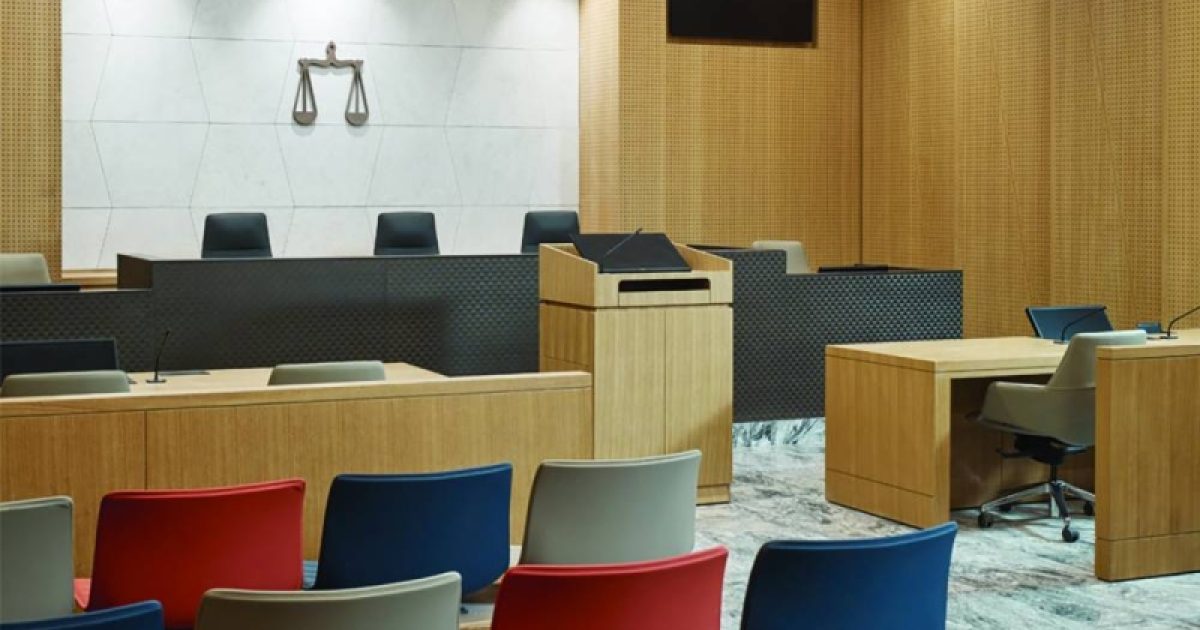
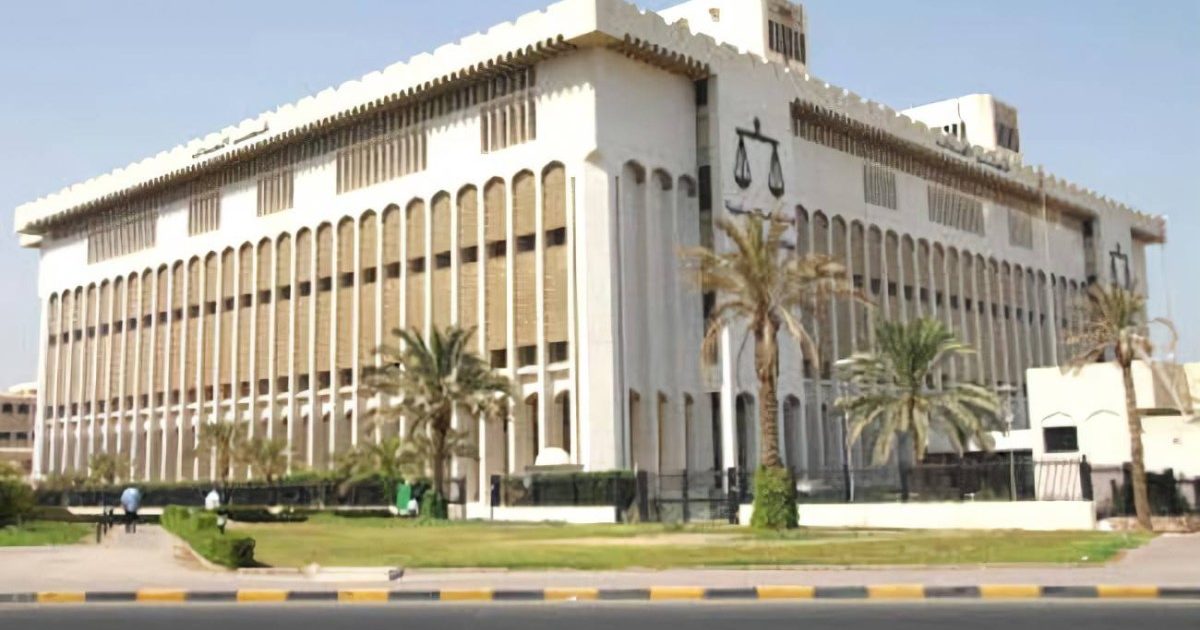
Kuwait's Personal Status Law No. 51 of 1984 governs this obligation within its rules on the maintenance of relatives, the most important of which is the maintenance of ascendants by descendants, meaning the support of a father and mother by their sons and daughters. Claims are heard by the Family Court established under Law No. 12 of 2015, and judgments are enforced through the Execution Department using the tools provided by the Civil and Commercial Procedure Law No. 38 of 1980.
This article focuses specifically on parents' maintenance by their children: when it becomes due, who must pay, how it is shared between brothers and sisters, what it covers in terms of housing, medical care and domestic help, how a parent files a claim, and what a child who has been paying alone can do about siblings who refuse to help. It also touches on the legal protection of parents against neglect and abuse. The general rules on spousal and child maintenance are covered in our guide to maintenance under Kuwaiti law and our article on custody and maintenance, so they are referred to here only where a comparison helps.
The Short Answer
In brief, a son or daughter is obliged to support a parent when two conditions meet: the parent is in need, meaning they have no property or income sufficient for their basic needs, and the child is financially able, meaning they have means beyond their own needs and those of the people they are primarily bound to support, namely their spouse and children. The child does not have to be male; a daughter with means is equally bound, and what counts is the existence of means, not age.
- What does it cover? Food, clothing, housing and medical care, plus the care and assistance a disabled or frail parent requires, all measured by sufficiency and by the means of the paying child.
- Several children: the obligation is spread among those who have means, the court takes differences in their income into account, and one child is not made to carry it alone where siblings can contribute.
- If the children refuse: the parent, or a legal representative, files a maintenance claim before the Family Court, and the judgment can be enforced, including by attaching salaries.
- From when is it payable? The general rule for relatives' maintenance is that it runs from the date of the court claim, not for past periods, so delay can cost the parent money that cannot later be recovered.
- The child who paid alone: may in some circumstances recover the siblings' shares, a question best reviewed with a lawyer as soon as the refusal becomes clear rather than years later.
The Legislative Framework in Kuwait
Several complementary statutes shape this area:
- Personal Status Law No. 51 of 1984: the primary source. It contains the rules on all types of maintenance, including relatives' maintenance, which covers both the support of parents by children and the support of children by parents, and it sets out the conditions and the grounds on which the obligation ends. Where the text is silent, the law refers to Islamic jurisprudence, which is why juristic reasoning on need, means and the limits of the duty plays a large part in this field.
- Family Court Law No. 12 of 2015: which brought personal status disputes before specialised courts in each governorate, regulated their procedure, introduced mechanisms for the amicable settlement of certain family disputes, and organised the Family Insurance Fund.
- Civil and Commercial Procedure Law No. 38 of 1980: which governs the compulsory enforcement of judgments, including attachment of wages, salaries and bank accounts, taking into account the priority enjoyed by maintenance debts.
- Law No. 16 of 2020 on Protection from Domestic Violence: which provides protective tools for family members, parents included, against physical, psychological and other forms of abuse within the family.
- Penal Code No. 16 of 1960: which criminalises assault, insult, threats and certain forms of endangering persons who cannot care for themselves, and which applies fully when the victim is a parent.
State welfare for the elderly and people in need also plays a role, as discussed in our article on the rights of older persons under Kuwaiti law. Government assistance does not automatically cancel the obligation of children who have means; rather, it is taken into account when assessing how much the parent actually needs. Whatever the assistance covers is not claimed from the children, and whatever remains falls on those of them who can pay.
Methodologically, parents' maintenance sits where statute, jurisprudence and judicial discretion meet. The statute lays down the principle, juristic doctrine works out the finer questions, and the court assesses each case on its facts. For that reason this article flags clearly the points on which jurists disagree or where the court's discretion is wide, so that readers do not act on a rule they assume to be absolute when it is not.
Substantive Rules: Conditions and Scope
1. The parent's need
The first condition is that the father or mother is in need, meaning they lack property or income sufficient for their basic requirements. This does not mean total destitution. A parent receiving a modest pension that does not cover rent and medication may be in need as to the shortfall, and the court can award a top-up maintenance that bridges the gap. Conversely, a parent with visible wealth or income-producing property that covers their needs has no claim against the children while that income suffices.
The court looks at need realistically: the parent's age, health, recurring medical costs, whether they support a spouse or minor children, and their customary standard of living. Need is assessed reasonably, avoiding both extravagance and stinginess. A practical question that often arises is whether a parent must sell the home they live in before claiming against their children. The general approach is that a home a person needs to live in is not treated as wealth that negates need, unlike investment property or funds beyond one's needs.
2. The child's means
The second condition is that the child is financially able, meaning they can pay from surplus property or earnings after meeting their own basic needs and those of their spouse and children. The order is clear: a person's own support comes first, then that of their spouse and children, and parents' maintenance is paid from what is left. A child without means is not burdened beyond capacity and is not required to borrow to support a parent.
Gender is irrelevant. A daughter with her own means is bound to support needy parents just as a son is, whether or not she is married. Her husband's wealth is not counted as hers, because her financial estate is separate, and a husband is not obliged to support his wife's parents.
Means include salary, self-employment income, rental returns and investment income. A child cannot escape the duty simply by pointing to heavy commitments; the court examines actual income and expenditure and distinguishes necessary obligations from discretionary spending that could be cut. At the same time, the court takes into account genuine instalments and debts actually deducted from income, because means are measured by what remains in hand rather than by the gross salary figure.
3. A parent who is able to work
A delicate question is whether a father who is healthy and capable of working, but does not work, is entitled to maintenance. For relatives in general, the rule is that a person able to earn is not entitled to maintenance, since they are expected to provide for themselves. Parents, however, hold a special position in Islamic jurisprudence. A significant body of jurists holds that a needy parent should not be compelled to earn where doing so would involve hardship or indignity unbecoming to a parent, so that maintenance is owed by a child with means even if the parent could do some work. Another line of opinion stresses that a child should not bear the support of someone able to support themselves.
In practice, the outcome depends on the statutory text and the court's assessment of the facts: the parent's age, the kind of work realistically available, their health, and whether their not working is genuine. A sixty-year-old father who lost his job and has moderate health problems is in a very different position from a middle-aged man who turns down suitable work. We therefore advise against relying on any absolute rule on this point before the facts are studied, whether you are the parent making the claim or the child facing it.
4. What maintenance covers: housing, medical care and domestic help
Parents' maintenance is not merely a food allowance. It covers the elements of a dignified life to the extent needed:
- Food and clothing: appropriate to the parent's situation, the child's means and prevailing custom.
- Housing: providing suitable accommodation or contributing to its rent. This may be done by having the parent live with the child where that is appropriate and causes no harm, provided the parent's right to a home that preserves their dignity and does not expose them to mistreatment is respected.
- Medical care: often the most important element for older parents, covering medicines, follow-up visits, physiotherapy and whatever the condition requires that public health services do not cover, provided the need is established by medical reports.
- A carer or domestic help: where a parent cannot look after themselves because of illness or age, the cost of someone to care for them may be included, in line with the actual need and the children's means. The court may set this as a separate amount or include it in a comprehensive award.
A related question is sometimes raised: does a son's obligation extend to supporting his father's wife who is not his mother, where the father is in need? The schools of jurisprudence differ on this, and the answer turns on the statutory text and the court's view. We therefore do not state a general rule and recommend that the facts be reviewed by a lawyer before such a claim is made or resisted.
5. Sharing the obligation among sons and daughters
Where a needy parent has more than one child with means, the whole burden should not be left on one of them. The prevailing juristic view is that parents' maintenance is not divided according to inheritance shares, so a daughter does not necessarily pay half of what a son pays. Instead, the focus is on means: each child contributes according to capacity, or equally where their means are similar. The court has discretion to set the shares in light of each child's income and obligations.
As a result, a son on a high salary may bear a larger share than a brother on a limited income, a daughter in well-paid employment bears a share, and a child without means is excused until their situation improves. A parent may sue all children with means in a single claim so that the court can allocate shares among them. If a child later becomes better off, or another falls on hard times, a variation claim can be filed to redistribute the shares.
A common misconception is that the eldest son, or the child the parent lives with, is solely responsible. In fact what matters is means, not birth order or place of residence, although a child's housing of a parent is a real contribution the court will take into account when allocating shares.
6. Siblings who refuse and the child who pays alone
It is common for one child to look after the parents out of devotion while capable siblings refuse to contribute. The question then is recourse: can that child claim the siblings' shares? The answer depends on several factors, including whether the payments were made as a gift or with the intention of recovering them, whether a judgment or agreement fixed each child's share, and whether the court authorised payment on behalf of a defaulting sibling.
The safest practical course is to bring the matter before the court early, either through a claim by the parent against all children with means, or by helping the parent file one if they are unable to do so themselves. A judgment fixing shares turns a moral dispute into an established, enforceable debt and protects sibling relationships from years of accumulated resentment. Once such a judgment exists, a sibling who pays another's share has a much clearer basis for recovery, because the debt has a defined amount.
Documenting what is spent matters even when relations are warm: keep medical receipts, rent transfers and messages asking siblings to contribute. These may later be the only evidence of the size of your contribution and the length of their refusal.
7. When maintenance becomes due and when it ends
An important and often overlooked point is that relatives' maintenance, including parents' maintenance, differs from spousal maintenance in that it exists to meet present need. The general rule is therefore that it runs from the date of the court claim, and is not awarded for earlier periods except in exceptional cases such as a prior agreement or judgment. A parent who waits years without claiming will usually not recover anything for those years.
Maintenance ends or is varied when the parent's need disappears, for example through an inheritance or a sufficient new income, or when the paying child loses their means. Either side may apply to increase or reduce the amount where circumstances change materially after judgment, such as rising medical costs, the child's retirement, or an increase in the child's own family responsibilities.
8. Filial duty and mistreatment from a legal perspective
Devotion to parents is at heart a religious and moral value that cannot be measured in money, and the law cannot compel affection. What it does is set a minimum floor of protection. Refusal to pay due maintenance is dealt with by a claim and compulsory enforcement. Abuse of a parent, whether assault, insult, threats, forcible eviction from their home or seizure of their money, may constitute offences under the Penal Code, and Law No. 16 of 2020 on Protection from Domestic Violence allows family members who are harmed, parents included, to seek protection.
This extends to serious neglect of a dependent parent in a child's care, such as leaving them without food, medication or basic care. Reporting and protection mechanisms are explained in our article on Kuwait's domestic violence protection law. It helps to distinguish between filial ingratitude in its moral sense, which is far broader than anything the law punishes, and criminal acts that harm a parent's safety, property or dignity, which is where the law steps in with deterrent tools.
A strained relationship does not, by itself, cancel legal rights and duties. A son who feels his father neglected him in childhood remains bound to support him if the conditions are met, and a parent estranged from a child keeps the right to claim. The court looks at the legal conditions of the obligation, not at who was more at fault in the relationship.
9. Maintenance of other relatives in brief
Relatives' maintenance is not limited to parents. There is the support of children by their father, covered in our earlier articles, and in some cases the obligation may extend to grandparents, grandchildren and other needy relatives. However, the scope of kinship that gives rise to maintenance beyond parents and direct children is a matter on which the schools of jurisprudence differ, and it is governed by the conditions set by Kuwaiti law. It commonly requires that the relative be unable to earn as well as in need. A claim by one sibling against another, or by a grandparent against a grandchild, therefore needs specific study of the statutory text and the facts before filing.
Settled Judicial Principles in Maintenance Disputes
Drawing on the general direction of Family Court and Court of Cassation rulings in maintenance disputes, several guiding principles can be summarised:
- The Court of Cassation has consistently held that assessing maintenance lies within the discretion of the trial court, which derives it from the circumstances of the case and the position of the parties, provided its assessment rests on reasonable grounds supported by the record.
- The courts have consistently treated means and hardship as questions of fact, established from documents and indications such as salary certificates, bank statements, the nature of employment and lifestyle, and not from bare assertion.
- It is settled that a maintenance judgment has only temporary authority: it stands while the circumstances in which it was issued continue, and may be varied upward or downward when those circumstances change materially.
- Courts tend not to place the entire burden on one child where siblings are shown to have means, and to allocate it fairly among them.
- Courts are careful to include medical care in the award where the need is proven by medical reports, as one of the core elements of sufficiency for older parents.
- Where needed, courts rely on investigations, social reports and correspondence with employers to establish the parties' real income.
Methodological note: the principles above are a general statement of settled judicial trends in maintenance disputes, not verbatim quotations from particular judgments. We have not cited case numbers or dates, because accurate citation requires checking the official collections of Court of Cassation rulings. Anyone intending to rely on a judicial principle before a court should cite the original judgment after verifying it. Several of the juristic questions mentioned above, including the position of a parent able to work, the maintenance of a father's wife, the scope of maintenance for more distant relatives and the method of sharing among children, are matters on which the schools differ, and their resolution depends on the statutory text and the court's interpretation.
Practical Steps: Filing and Enforcing a Parents' Maintenance Claim
Before filing
- Try to settle amicably: many of these disputes are resolved through a family meeting or the mediation of a respected relative. Some family disputes may also go through the amicable settlement mechanisms under the Family Court Law, and a lawyer will check whether this applies before the claim is registered.
- Put the request in writing: a prior formal notice is not usually required, but clear written requests help prove refusal and show how each child responded.
- Do not wait too long: because maintenance generally runs from the date of the court claim, prolonged negotiation without result has a real cost.
Filing before the Family Court
- Claimant: the needy parent, or their legal representative if they cannot manage their affairs, such as a court-appointed guardian, or a lawyer acting under a power of attorney.
- Defendants: it is advisable to name all sons and daughters with means in a single claim, so the court can allocate shares at once and avoid multiple and inconsistent proceedings.
- Competent court: the Family Court of the competent governorate under the applicable rules of local jurisdiction.
- Relief sought: a comprehensive monthly maintenance covering food, clothing, housing, medical care and assistance where needed, its allocation among the defendants, provisional enforceability of the judgment where permissible, and interim maintenance where the need is urgent pending final judgment.
- Evidence: the court may request whatever it considers necessary, write to employers to confirm the children's salaries, or rely on investigations and social reports.
Documents usually required
- The parent's civil ID and proof of the parent-child relationship, such as birth certificates, nationality certificates or official family records.
- Proof of the parent's income or lack of it: a pension certificate, a statement of no income, or bank statements.
- Medical reports, treatment and pharmacy invoices, and a report on the need for a carer or domestic help where applicable.
- The lease or other proof of housing costs.
- Whatever information is available on the children's employers and income, even approximate, to direct the court to sources of evidence.
- Proof of refusal or past contributions: messages, bank transfers, witnesses.
Enforcing the judgment
Once judgment is issued, it is filed with the Execution Department for compulsory enforcement if the child does not pay voluntarily. The main tool is attachment of salary at the employer, where maintenance debts enjoy preferential treatment in the attachable proportion and in priority over ordinary debts, as explained in our article on salary attachment in Kuwait. Bank accounts can also be attached, and the other measures the law provides against a defaulting debtor may be taken subject to their conditions.
The Family Insurance Fund is primarily associated with spousal and child maintenance judgments. Whether parents' maintenance can be paid through it must be checked against the rules and regulations in force at the time of the request, and should not be assumed.
Advice for a child facing a claim
- Present an honest, documented picture of your income and essential obligations; exaggerating burdens undermines credibility.
- If you already contribute in kind, for example by housing the parent or paying for treatment, prove it with documents so it is credited to you.
- If you have siblings with means, insist that they be joined to the claim so you do not carry the burden alone.
- Remember that an amicable arrangement, even a documented agreed monthly sum, may preserve your relationship with your parent better than any judgment.
Hypothetical Cases
Case 1: A widowed mother and three children
Hypothetical facts: a seventy-year-old widow with no income apart from limited social assistance suffers from a chronic illness requiring monthly medication and a carer. She has two employed sons and an employed daughter. One son has covered most of her expenses for two years, while the other two refuse to contribute, citing their own commitments.
Legal analysis: the mother's need is clear as to the part not covered by assistance, and all three children have means based on their salaries. She may sue all three together before the Family Court, which can set a comprehensive award covering treatment and care and divide it according to each child's means, the daughter included. The son who paid alone for two years faces a harder question as to the past: it depends on whether his payments were a gift and on the general rule that relatives' maintenance is not awarded for past periods. Bringing the matter to court earlier would have served him better.
Case 2: A father able to work
Hypothetical facts: a fifty-year-old father in good health closed his private business after a commercial loss and demands full monthly maintenance from his employed son, who is married, supports three young children and earns an average salary.
Legal analysis: two issues arise. The first is the father's ability to earn, on which jurists differ and the court assesses the real circumstances. The second is the son's means: his support of his wife and children comes first, and he is bound only from the surplus. The court may award a reasonable partial amount or dismiss the claim depending on what is proven about the son's income and the father's situation. Accurate evidence of the son's real obligations and of the work realistically available to the father is decisive.
Case 3: Mistreatment of an elderly father
Hypothetical facts: an elderly father living with one of his sons in a house the father owns is repeatedly insulted, prevented from going out or receiving his other children, and the son has taken control of his bank card and pension.
Legal analysis: this case goes beyond maintenance to protection. The facts may amount to offences under the Penal Code, and protection may be sought under Law No. 16 of 2020 on Protection from Domestic Violence. The father is entitled to recover control of his money, and if he is shown to be unable to manage it himself, the proper route is a court-appointed guardian subject to supervision, not control by one of the children. Intervention here requires both speed and tact, to protect the father's safety and what remains of the family's ties.
Comparison: Parents' Maintenance and Other Types
- Parents' maintenance by children: requires the parent's need and the child's means; binds sons and daughters; shared among children with means according to their means; generally due from the date of the court claim; covers food, clothing, housing, medical care and assistance where needed.
- Children's maintenance by the father: owed by a father to his young children and those treated as such; includes specific elements such as education and custody costs; covered in our custody and maintenance article.
- Spousal maintenance: arises from a valid marriage contract; due even if the wife has means; has its own rules on past periods; covered in our maintenance guide.
- Other relatives: narrower in scope and subject to juristic disagreement; usually requires inability to earn as well as need, plus the payer's means; generally due from the date of the claim.
- Enforcement for all types: through the Execution Department, with maintenance debts ranking ahead of ordinary debts in salary attachment.
- Protection from abuse: available to all family members, parents included, under the Penal Code and the domestic violence law, regardless of any maintenance dispute.
Frequently Asked Questions
1. Is a married daughter obliged to support her parents?
Yes, if she has her own property or income that makes her financially able and the parent is in need. Her husband's income is not counted, and her husband is not obliged to support her parents.
2. Is maintenance divided between sons and daughters like inheritance?
The prevailing view is that it is not divided by inheritance shares; each child's means is considered, and the court has discretion to set the shares.
3. My father receives a pension. Is he entitled to maintenance?
If the pension covers his needs, no. If it does not, particularly given medical costs, he may be entitled to a top-up for the shortfall.
4. Can a father sue only one of his children?
Procedurally yes, but it is better to join all children with means so the burden is shared fairly, and a child sued alone may point to siblings who have means.
5. I supported my parents alone for years. Can I recover from my siblings?
That depends on the intention behind the payments and on whether a judgment or agreement fixed the shares. As relatives' maintenance is generally not awarded for past periods, early court action is advisable.
6. Does a parent lose the right to maintenance for having neglected the children when they were young?
As a rule the obligation stands whenever its conditions are met, and past disputes do not cancel it by themselves, although the court considers each case on its facts.
7. Must a son house his parents in his own home?
He must ensure suitable housing, either by having them live with him where appropriate and harmless, or by providing or contributing to separate accommodation.
8. Can maintenance include the cost of a maid or nurse?
It can, where the parent is unable to care for themselves and the need is proven by medical reports, within the limits of the children's means.
9. How long does a maintenance case take?
It varies with the circumstances, the number of defendants and the evidence required; interim maintenance can be requested where the need is urgent.
10. What if the child works outside Kuwait?
The claim can be brought in Kuwait under the rules of jurisdiction, while enforcement against assets abroad is subject to the rules for enforcing judgments in the other country.
11. Can the amount be changed after judgment?
Yes, by applying for an increase or reduction when the circumstances of the parent or the children change materially.
12. Can a grandfather claim maintenance from a grandchild?
In some circumstances, possibly, but the scope of maintenance for more distant ascendants and the order of those liable need specific study of the statutory text and the facts.
13. Is refusing to support one's parents a crime?
Refusal as such is dealt with by a civil claim and compulsory enforcement. Abuse or serious neglect of a dependent parent, however, may amount to an offence under the Penal Code or justify protection under the domestic violence law.
14. Is government assistance a substitute for the children's support?
Assistance does not cancel the obligation of children with means, but it is taken into account in assessing need, so the children are asked only for what remains after it.
Conclusion
Parents' maintenance is more than a financial obligation; it is the legal expression of the filial devotion on which Kuwaiti society is built. Personal Status Law No. 51 of 1984 seeks to guarantee a dignified life to a needy parent from the means of capable children, without burdening a child who lacks means and without leaving the load on one child while the others step away.
Three practical lessons stand out. First, maintenance generally runs from the date of the court claim, so delay has a cost. Second, joining all children with means in one claim achieves fairness and prevents repeated litigation. Third, abuse or neglect of parents is no longer a closed family matter; the law offers effective means of protection.
In every case, an amicable solution within the family is best where possible, and the court remains the recourse when it is not, provided the process is handled with care for the parent's rights and dignity and for what remains of the bond between siblings.
Legal Notice
This article provides general legal information for awareness purposes only. It is not legal advice and is not a substitute for it. Outcomes depend on the facts of each case and the provisions in force at the time of the dispute, and some of the questions discussed are subject to juristic disagreement or evolving case law.
If you are a parent in need of support from your children, a child carrying the burden of your parents alone and wishing to involve your siblings, or someone concerned about the mistreatment of a parent, the team at Yumnaak Law Firm would be glad to review your situation in confidence and help you choose the most appropriate path, whether amicable or through the courts.