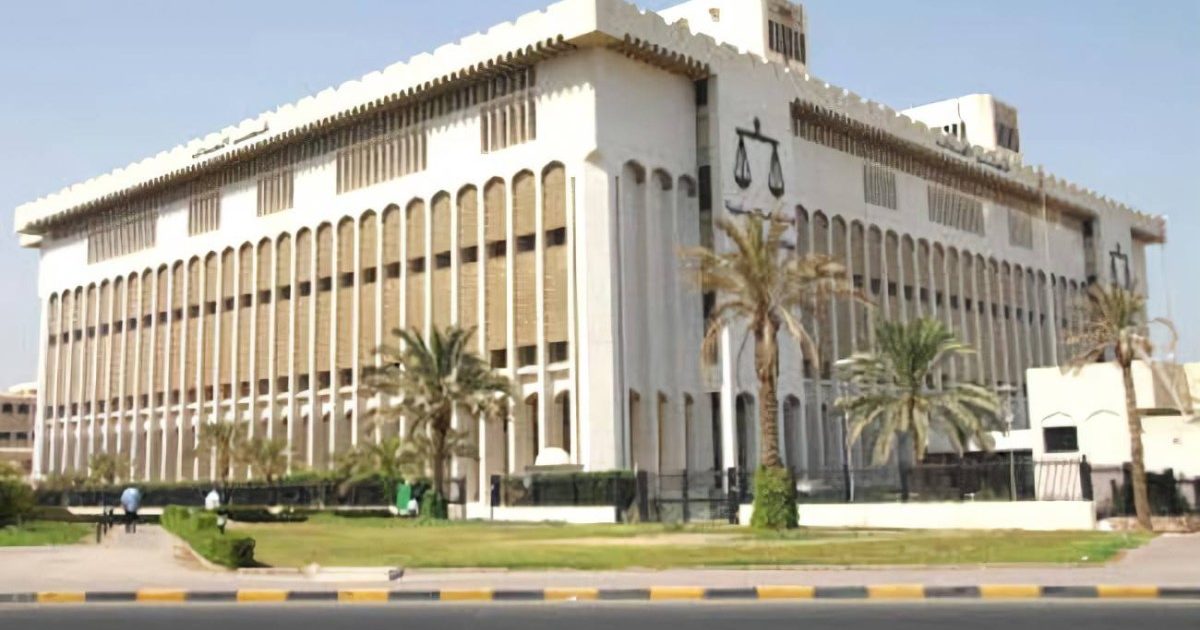
Inheritance law in Kuwait is one of the most consequential branches of personal status legislation, touching every family — Kuwaiti and resident alike. The Personal Status Law No. 51 of 1984, primarily in its Book V, codifies the rules of succession based on Islamic Sharia principles. For Sunni Muslims, the Maliki school of jurisprudence is the principal reference, while the Ja'fari school governs matters of personal status, including inheritance, for Shia Muslims. This article provides a comprehensive overview of the legal framework, the calculation of shares, estate administration procedures, and dispute resolution.
Legal Framework for Inheritance in Kuwait
Kuwait's inheritance system draws from two primary sources: the Quran and Prophetic Sunnah as the original legislative authority for succession, and the Personal Status Law No. 51 of 1984 as the codified statutory framework. Book V of the law provides detailed regulation of inheritance, testamentary bequests, and estate liquidation.
The law applies Sunni jurisprudence (primarily the Maliki school) to Sunni Muslims, while the Ja'fari school applies to Shia Muslims in personal status matters including inheritance. Non-Muslims are governed by the rules of their own religious communities unless they agree to apply Kuwaiti law.
Conditions and Impediments to Inheritance
Three conditions must be met for inheritance to occur under Kuwaiti law:
- Death of the deceased: Either actual death, confirmed by a death certificate, or constructive death declared by court order — for instance, when a missing person is declared dead after the legally prescribed period.
- Existence of the heir at the time of death: The heir must be alive at the moment the deceased passes away. An unborn child (in utero) is included if born alive within the legally recognized period.
- Absence of impediments: No legal bar to inheritance must exist.
The recognized impediments to inheritance are:
- Intentional homicide: A person who intentionally and unlawfully kills the deceased is barred from inheriting, whether as a principal or accomplice. This rule prevents anyone from hastening their inheritance through criminal acts.
- Difference of religion: Under the Sunni jurisprudence applied in Kuwait, a Muslim does not inherit from a non-Muslim, and a non-Muslim does not inherit from a Muslim.
Categories of Heirs
Kuwaiti law, following Islamic jurisprudence, classifies heirs into two main categories:
Fixed-Share Heirs (Ashab al-Furud): These are heirs entitled to predetermined shares of the estate as specified in the Quran. The six prescribed shares are:
- One-half (1/2): Due to the husband (if the wife leaves no descendant heir), a sole daughter, a sole son's daughter (in the absence of a direct child), a sole full sister, or a sole paternal sister.
- One-quarter (1/4): Due to the husband (with a descendant heir present) or the wife/wives (without a descendant heir).
- One-eighth (1/8): Due to the wife or wives when the husband leaves a descendant heir.
- Two-thirds (2/3): Due to two or more daughters (without a son), two or more son's daughters, two or more full sisters, or two or more paternal sisters.
- One-third (1/3): Due to the mother (without descendant heirs or multiple siblings) or two or more maternal siblings.
- One-sixth (1/6): Due to the father (with a descendant heir), the mother (with a descendant heir or multiple siblings), the paternal grandfather, the grandmother, or a sole maternal sibling.
Residuary Heirs (Asaba): These heirs take whatever remains of the estate after the fixed-share heirs receive their portions, or the entire estate if no fixed-share heirs exist. They include:
- Residuary by themselves (Asaba bi-nafsihi): Male relatives in the paternal line — sons, grandsons, the father, grandfather, brothers, nephews, and paternal uncles — ranked by proximity of relationship.
- Residuary through another (Asaba bi-ghayrihi): Female heirs who become residuary by the presence of a male counterpart at the same level, such as a daughter inheriting alongside a son, with the male receiving double the female's share.
- Residuary with another (Asaba ma'a ghayrihi): Full or paternal sisters who inherit as residuary heirs when co-existing with daughters or son's daughters.
Awl and Radd: Balancing the Shares
Two important mechanisms address situations where the prescribed shares do not neatly consume the estate:
Awl (Proportional Reduction): When the total of fixed shares exceeds the estate, all shares are proportionally reduced. For example, if a woman dies leaving a husband, two full sisters, and a mother, the combined shares exceed the whole, so each heir's portion is scaled down proportionally.
Radd (Redistribution of Surplus): When fixed shares total less than the estate and no residuary heir exists, the surplus is redistributed to the fixed-share heirs in proportion to their shares. Under the Sunni jurisprudence applied in Kuwait, spouses are generally excluded from radd when other fixed-share heirs or residuary heirs are present.
Spousal and Children's Inheritance
The law specifies clear shares for spouses:
- Husband: Inherits one-half if the wife leaves no descendant heir, and one-quarter if she does.
- Wife: Inherits one-quarter if the husband leaves no descendant heir, and one-eighth if he does. Multiple wives share equally in their collective portion.
For children:
- Sons inherit as residuary heirs, taking whatever remains after fixed shares are distributed.
- Daughters receive one-half (if sole) or two-thirds (if two or more) as fixed-share heirs, but when a son is present, they inherit alongside him as residuary heirs, with each male receiving double the female's share.
Grandchildren's Inheritance and the Obligatory Bequest
One of the most significant provisions in Kuwaiti law is the obligatory bequest (al-wasiyya al-wajiba). This mechanism protects grandchildren who would otherwise be excluded from inheritance because their parent (the deceased's child) predeceased the grandparent. Under this rule, grandchildren of a predeceased son or daughter are entitled to a share equal to what their parent would have received, up to a maximum of one-third of the estate.
The obligatory bequest takes priority over both voluntary bequests and the distribution of inheritance shares. It was introduced to address the long-standing jurisprudential problem of orphaned grandchildren being excluded by their surviving uncles.
Inheritance of Parents, Grandparents, and Siblings
- Father: Receives one-sixth as a fixed share when a male descendant heir exists; one-sixth plus the residue when only female descendant heirs exist; and the entire residue as a residuary heir when no descendant heirs exist.
- Mother: Receives one-sixth with descendant heirs or multiple siblings; one-third without them. In the two Umariyyatan cases (spouse, mother, and father only), the mother receives one-third of the remainder after the spouse's share.
- Paternal grandfather: Steps into the father's position in his absence, with detailed jurisprudential rules governing his co-inheritance with siblings.
- Grandmother: Receives one-sixth, whether maternal or paternal; multiple grandmothers share in that sixth equally.
- Full and paternal siblings: Inherit as residuary heirs in the absence of male descendant heirs and the father. Sisters receive fixed shares (one-half for one, two-thirds for two or more).
- Maternal siblings: One receives one-sixth; two or more share one-third equally, regardless of gender. They are excluded by any descendant heir or male ascendant.
Voluntary Bequest (Wasiyya): Rules and Limits
Kuwaiti law permits testamentary bequests subject to strict conditions:
- One-third cap: A bequest may not exceed one-third of the net estate (after debts and funeral expenses), unless the heirs unanimously consent after the testator's death.
- No bequest to an heir: A bequest in favor of a legal heir is invalid unless the remaining heirs approve it after death, in line with the Prophetic tradition: "There is no bequest for an heir."
- Capacity: The testator must be of sound mind, of legal age, and acting of free will.
- Priority over inheritance: Valid bequests are executed from the estate before inheritance shares are distributed.
Estate Administration Procedures
Settling an estate in Kuwait follows a structured process:
- Death certificate: Obtained immediately to officially document the death.
- Certificate of heirs (I'lam Shar'i): Issued by the competent court, identifying all lawful heirs, their relationship to the deceased, and their respective shares.
- Estate inventory: A comprehensive accounting of all assets — real estate, movable property, bank accounts, investments, and financial rights.
- Debt settlement: All debts and obligations of the deceased are paid from the estate before any distribution, including religious obligations such as unpaid zakat.
- Execution of bequests: Both obligatory and voluntary bequests are fulfilled within the one-third limit.
- Distribution of shares: The remainder is distributed among the heirs according to their legally prescribed shares.
The Estate Administration Department at the Ministry of Justice oversees the liquidation and distribution of estates, particularly those involving real estate or complex assets. Heirs may also agree on an amicable division if all are of full legal capacity and in agreement.
The Court's Role in Inheritance Disputes
The Personal Status Court in Kuwait has jurisdiction over all inheritance disputes, including:
- Paternity and lineage claims affecting the identification of heirs.
- Challenges to the certificate of heirs or inclusion/exclusion of claimants.
- Judicial partition when heirs cannot agree on an amicable division.
- Annulment or challenge of bequests, including claims that a bequest exceeds the one-third limit.
- Claims for delivery of an inheritance share withheld by other heirs.
- Actions against unauthorized appropriation of estate assets before partition.
- Disputes over jointly owned property, including co-owned real estate and family businesses.
The court regularly appoints expert calculators for complex inheritance cases involving awl, radd, or multi-layered succession.
Non-Muslim Inheritance in Kuwait
Non-Muslim residents and citizens are governed by the inheritance rules of their own religious communities. If all parties to an estate belong to the same faith, the rules of that faith apply. Where there is a difference of religion between the deceased and a potential heir, the general rule barring inter-faith inheritance applies. Non-Muslims may, however, agree to apply Kuwaiti law to their estate if they so choose.
Practical Steps for Estate Settlement
- Obtain the death certificate promptly and without delay.
- Apply to the competent court for a certificate of heirs, providing all required documentation.
- Conduct a thorough inventory of the deceased's assets, including bank accounts, investments, and real estate.
- Coordinate with the Estate Administration Department at the Ministry of Justice to initiate liquidation.
- Settle all debts and financial obligations from the estate before distribution.
- Attempt an amicable partition among the heirs; if consensus is impossible, apply for judicial partition.
- Engage a lawyer specializing in personal status and inheritance law to safeguard your rights.
Conclusion
Inheritance law in Kuwait is detailed and precise, requiring a thorough understanding of both Islamic jurisprudence and the statutory provisions that codify it. Whether the matter involves calculating prescribed shares, applying the rules of proportional reduction or surplus redistribution, enforcing the obligatory bequest, or administering an estate with diverse and complex assets, professional legal guidance is essential to protecting every party's rights.
If you are facing an inheritance matter, estate administration challenge, or any succession dispute, the team at Yumnaak Law Firm is fully prepared to provide specialized legal counsel and assist you through every step of the process to protect your lawful rights.