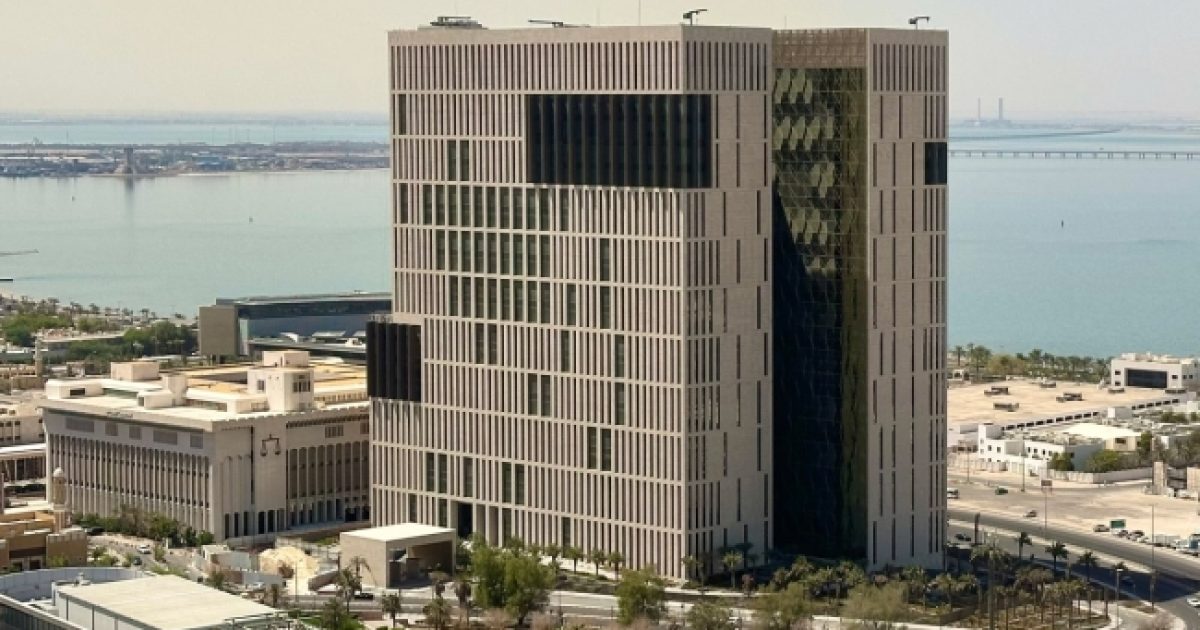
The construction sector is one of Kuwait's largest economic pillars, with the country undertaking major infrastructure, residential, commercial, and government projects. Given the multitude of parties involved and the complexity of contractual relationships, disputes are an inevitable feature of construction projects.
These disputes range from disagreements over work quality and completion delays to variation orders, financial claims, building defects, and decennial liability. The Kuwaiti Civil Code, issued by Decree Law No. 67 of 1980, regulates construction contracts (muqawala) in Articles 661 through 690, while Article 692 addresses the ten-year structural guarantee.
This comprehensive guide examines the legislative framework governing construction contracts in Kuwait, the types of contracts used, each party's obligations, and the mechanisms available for resolving disputes.
Legislative Framework for Construction Contracts
The regulation of construction contracts in Kuwait draws on several principal legislative sources:
- The Civil Code (Decree Law No. 67 of 1980): Regulates the muqawala contract under the chapter on named contracts. Articles 661 to 690 address the definition, obligations, and liability arising from construction contracts. A muqawala is defined as a contract whereby one party (the contractor) undertakes to manufacture something or perform work in exchange for consideration promised by the other party (the employer).
- The Public Tenders Law: Governs the procedures for tendering and awarding government contracts, and establishes specific requirements for securities, guarantees, and penalties applicable to public-sector projects.
- The Judicial Arbitration Law (Law No. 11 of 1995): Regulates arbitration proceedings as an alternative dispute resolution mechanism, widely used in major construction disputes.
- General principles of the Civil Code: Provisions on contracts, civil liability, compensation, and force majeure apply whenever no specific provision exists within the muqawala chapter.
Types of Construction Contracts
Several contract types are commonly used in Kuwaiti construction projects, each distributing risk differently between the parties:
- Lump Sum Contracts: The parties agree on a fixed total price for completing all works according to specified plans and specifications. The contractor bears the risk of cost overruns but may claim additional compensation only in exceptional circumstances recognized by law.
- Unit Price Contracts: A price is set for each unit of work (cubic meter of concrete, linear meter of piping, etc.), and the final price is calculated by multiplying actual quantities by the agreed unit rates.
- Cost-Plus Contracts: The contractor receives the actual cost of works plus a percentage or fixed fee for profit and overheads. Typically used when the scope of works cannot be precisely defined in advance.
- Design-Build Contracts: The contractor assumes responsibility for both design and construction, reducing the employer's coordination burden but granting the contractor greater control over the project.
- Build-Operate-Transfer (BOT): The investor builds and operates the project for a specified period to recoup costs and earn profit, then transfers ownership to the state. Kuwait has undertaken several BOT projects in the energy and infrastructure sectors.
Obligations of the Contractor, Employer, and Engineer
Contractor's obligations include completing the works in accordance with the agreed specifications and drawings within the stipulated timeframe, maintaining quality standards, providing site safety measures, notifying the employer of unforeseen obstacles, and assuming responsibility for subcontractors' work.
Employer's obligations include delivering the site free from obstructions, making timely payments in accordance with contract terms and approved payment certificates, providing design documents on schedule, obtaining necessary governmental approvals, and refraining from unwarranted interference with the contractor's work.
The engineer's role is pivotal in construction contracts. The architect or consulting engineer supervises execution, verifies compliance with specifications, and issues payment and completion certificates. Engineers are liable for design errors that cause building defects or endanger structural safety, and may bear joint liability with the contractor under the decennial guarantee when defects are attributable to faulty design or supervision.
Defective Work, Delays, and Claims
Defective work: When the employer discovers defects, available remedies include requiring the contractor to rectify defects at its own expense, carrying out repairs through third parties at the contractor's cost (after formal notice), seeking a proportionate reduction in the contract price, or terminating the contract if defects are so serious that the work is unfit for its intended purpose. The employer must inspect the work upon delivery and notify the contractor of defects within a reasonable period.
Delay and extension of time: Delay in completion is among the most common construction disputes. The employer may impose liquidated damages if provided for in the contract, or claim actual damages caused by the delay. Conversely, the contractor is entitled to an extension of time when delays result from causes beyond its control, such as late site handover, issuance of variation orders requiring additional time, or exceptional circumstances like severe weather conditions.
Variation orders: The employer typically has the right to issue variation orders modifying the scope of works. The contractor is entitled to corresponding adjustments in price and time. Disputes commonly arise over the valuation of variations and their impact on the project schedule, making thorough written documentation of all instructions and changes essential.
Payment Certificates, Retention, and Guarantees
Interim payment certificates are issued based on the engineer's assessment of work progress, and the employer must pay within the period stipulated in the contract. The final payment certificate is issued after all works are complete, the maintenance period has expired, and all claims have been settled. Delayed payment constitutes a material breach of the employer's obligations.
Retention money — typically 5% to 10% of each interim payment — is withheld as security for proper performance and defect rectification. A portion is released upon provisional acceptance and the remainder upon final acceptance. Retention disputes are common, particularly when the employer refuses release citing alleged defects or incomplete works.
Performance bonds and bank guarantees are standard requirements. These are usually unconditional and payable on first demand, which frequently gives rise to disputes about the legitimacy of calling on the bond, especially where the contractor alleges that the call is abusive or made in bad faith.
Subcontractors and Force Majeure
The contractor may subcontract portions of the work unless the contract prohibits it or the nature of the work requires personal performance. The main contractor remains liable to the employer for all subcontractor work. No direct contractual relationship exists between the employer and subcontractors unless the law or contract provides otherwise.
Force majeure excuses the contractor from liability for delay or non-performance when an unforeseeable and unavoidable event occurs, such as natural disasters, wars, or sudden governmental measures. The contractor must prove that force majeure conditions are met, notify the employer immediately, and take reasonable steps to mitigate the consequences. The COVID-19 pandemic and associated lockdowns triggered numerous force majeure disputes in Kuwaiti construction contracts.
Decennial Liability: Ten-Year Structural Guarantee
One of the most significant provisions in Kuwaiti construction law is Article 692 of the Civil Code, which imposes a ten-year guarantee on the contractor and architect for the structural safety of buildings from the date of delivery. This guarantee covers total or partial collapse, structural defects threatening the building's safety or stability, and soil defects on which the structure was erected.
This guarantee is a matter of public policy — parties cannot contractually waive or reduce it. The contractor and architect bear joint and several liability. The employer must file a claim within three years of discovering the defect or collapse, or the claim will be time-barred.
Insurance Requirements in Construction
Major construction projects in Kuwait require several types of insurance:
- Contractor's All Risks (CAR) Insurance: Covers physical damage to the works during execution, including fire, theft, and natural disasters.
- Professional Indemnity Insurance: Protects engineers and consultants against compensation claims arising from design or supervision errors.
- Third-Party Liability Insurance: Covers damage caused to third parties as a result of construction activities.
- Workers' Compensation Insurance: Covers workplace injuries and compensation payable to workers.
Dispute Resolution Mechanisms
Several mechanisms are available for resolving construction disputes in Kuwait, ranging from amicable to adjudicative:
Engineer's decision: Many construction contracts grant the engineer authority to issue initial decisions on disputes, which are temporarily binding pending challenge.
Dispute Adjudication Board (DAB): Used in major projects, comprising independent experts who issue temporarily binding decisions. Their use has grown in Kuwait with the adoption of FIDIC contracts.
Mediation: Parties often resort to mediation before escalating to arbitration or litigation, valued for its confidentiality, flexibility, and speed.
Arbitration: Governed by Law No. 11 of 1995, arbitration is the preferred mechanism for significant construction disputes due to arbitrator expertise and faster resolution compared to litigation. Both institutional arbitration (such as the GCC Commercial Arbitration Centre) and ad hoc arbitration are available.
Litigation: Court proceedings remain available, particularly where no arbitration agreement exists or where urgent measures such as injunctions or expert appointments are needed.
FIDIC Contracts in Kuwait
Contracts published by the International Federation of Consulting Engineers (FIDIC) are widely used in major Kuwaiti construction projects. The most common forms include the Red Book (employer-designed works), the Yellow Book (design-build), and the Silver Book (EPC/Turnkey). FIDIC contracts provide balanced risk allocation and clear mechanisms for claims and dispute resolution. However, parties in Kuwait frequently introduce substantial amendments to the particular conditions that may disturb this balance, making careful legal review of each contract essential.
Practical Advice for Avoiding and Resolving Disputes
- Draft contracts carefully, precisely defining scope, specifications, and timelines to minimize areas of disagreement.
- Document all correspondence, instructions, and meetings in writing — documentation is the first line of defense in any dispute.
- Comply strictly with contractual notice and claims procedures within the specified time limits.
- Pursue early negotiation to resolve disagreements before escalation, as construction disputes are lengthy and costly.
- Engage a lawyer specializing in construction contracts from the negotiation and drafting stage onward.
- Maintain accurate daily records of work progress, problems, and delays.
- Review insurance policies and guarantees carefully to ensure adequate coverage.
Construction contract disputes are among the most complex commercial disputes, requiring deep understanding of legal, technical, and financial dimensions. Whether you are a contractor, project owner, or consulting engineer, sound legal preparation and meticulous documentation are the best means of protecting your rights and interests.
At Yumnaak Law Firm, our team has extensive experience in construction and building contract disputes in Kuwait. We invite you to contact us for specialized legal consultation to help protect your rights — whether at the contract drafting stage, during project execution, or when a dispute arises.