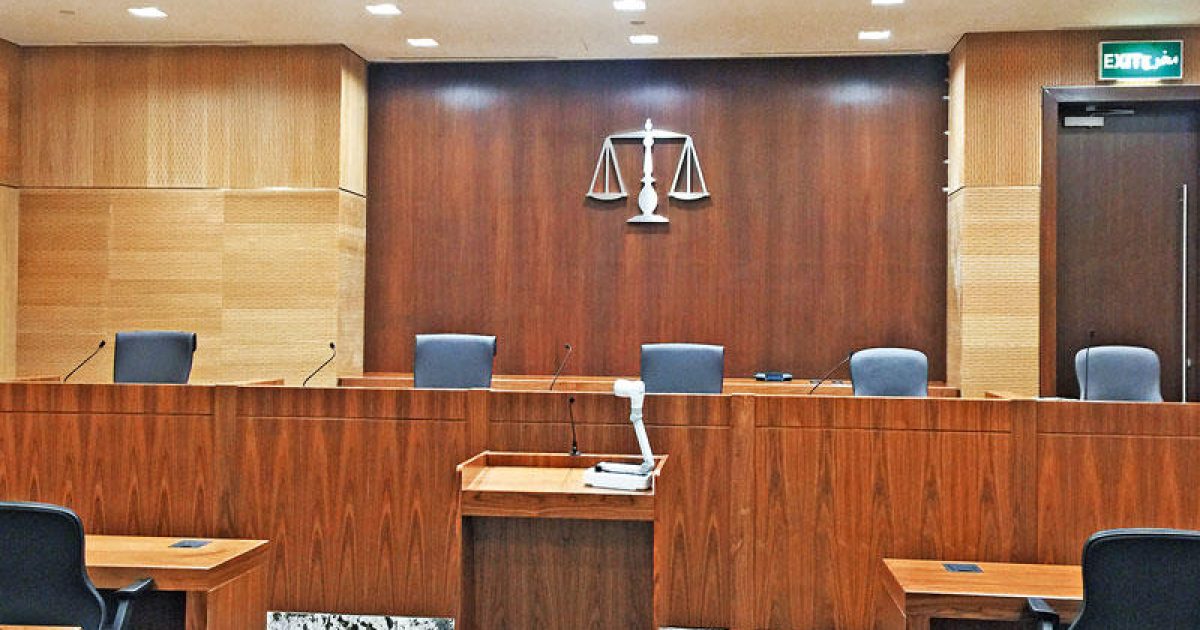
The military justice system is a fundamental component of Kuwait's broader legal framework. It is responsible for adjudicating offenses committed by military personnel and those subject to military law. The Kuwaiti legislator has carefully structured this system to uphold military discipline while safeguarding the constitutional rights and guarantees of the accused. This article provides a comprehensive overview of Kuwait's military justice system, including its legal foundation, court structure, jurisdiction, offenses, rights of the accused, and procedures for investigation, trial, and appeal.
Legal Framework
Kuwait's military justice system rests on several legislative and constitutional foundations:
- Constitution, Article 164: The Kuwaiti Constitution expressly authorizes the establishment of military courts by law. It confines their jurisdiction to military offenses committed by members of the armed forces and security services, within the limits prescribed by law. The Constitution also affirms judicial independence as a core principle applicable to all courts, including military tribunals.
- Military Justice Law No. 23 of 1990: This is the principal legislation governing military justice in Kuwait. Enacted during a pivotal period in the region's history, it regulates the formation, jurisdiction, and procedures of military courts, as well as sentencing and appeals. The law has been amended over time to address practical gaps revealed through application.
- Military Penal Code: This complementary statute defines specific military offenses and their corresponding penalties, working in tandem with the Military Justice Law.
- Military Regulations and Orders: These are issued by military command authorities and govern the detailed aspects of discipline and military service.
Structure of Military Courts
The Kuwaiti legislator has organized military courts into multiple tiers to ensure justice and provide opportunities for review:
- Military Court of First Instance: This court has original jurisdiction over military cases, whether misdemeanors or felonies. It is typically composed of military judges whose ranks correspond to the seriousness of the case and the rank of the accused.
- Military Court of Appeal: This court reviews judgments of the first-instance court and has the authority to affirm, modify, or overturn them. Its existence guarantees the right to two levels of adjudication.
- Supreme Military Court (Cassation): The highest tier of military adjudication, this court reviews appeals on points of law from the appellate court. Its review is limited to questions of legal interpretation and application, not factual determinations.
Military judges must be officers with appropriate legal expertise and experience, and care is taken to ensure that the judge's rank is commensurate with that of the accused, thereby preserving impartiality and independence.
Personal and Subject-Matter Jurisdiction
Personal Jurisdiction
The following categories of individuals are subject to military justice:
- Officers, non-commissioned officers, and enlisted members of the armed forces (army, navy, and air force).
- Members of the National Guard.
- Internal security personnel in specific circumstances.
- Students at military colleges and institutes.
- Civilians working in military installations, in exceptional cases.
- Prisoners of war during armed conflict.
Subject-Matter Jurisdiction
Military courts have jurisdiction over:
- Military offenses enumerated in the Military Penal Code.
- Crimes committed within military camps and installations.
- Offenses related to military security and war secrets.
- Serious disciplinary violations.
Notably, ordinary crimes committed by military personnel off duty or outside military installations are generally subject to civilian court jurisdiction, unless the offense is directly connected to the individual's military function.
Principal Military Offenses
The Military Penal Code defines a range of offenses specific to the military environment:
- Desertion: One of the most serious military offenses, involving leaving service without authorization with the intent not to return. Penalties are significantly more severe during wartime or in the face of the enemy.
- Absence Without Leave (AWOL): Distinguished from desertion by the absence of intent not to return, but still constitutes a breach of military duty. Penalties correspond to the duration and circumstances of the absence.
- Insubordination and Disobedience: Includes refusal to carry out lawful military orders or mutiny against military authority. Penalties are aggravated when committed in the presence of troops or during wartime.
- Disclosure of Military Secrets: Unauthorized revelation of military information, plans, or secrets to any unauthorized party. This offense carries severe penalties due to its implications for national security.
- Conduct Unbecoming: Acts that bring discredit upon the military institution or are inconsistent with the standards of military honor.
- Negligence in Guard Duty: Failure to properly perform guard or sentry duty, including sleeping on watch. Penalties are heightened during wartime.
- Destruction or Loss of Military Equipment: Intentional or negligent damage to military property.
- Mutiny and Collective Insubordination: Among the gravest military offenses, particularly when accompanied by the use of weapons.
Military Disciplinary System vs. Criminal Prosecution
Kuwait's military system distinguishes between two accountability tracks:
- Disciplinary Track: Addresses minor violations and disciplinary infractions that do not rise to the level of criminal offenses. Military commanders have the authority to impose disciplinary sanctions including warnings, reprimands, leave restrictions, disciplinary detention for specified periods, promotion delays, and other measures. Each rank has defined limits on the disciplinary sanctions it may impose.
- Criminal Track (Court-Martial): Reserved for serious military offenses requiring adjudication before competent military courts. The military prosecution handles investigation and referral, and the court may impose custodial sentences and military-specific penalties.
Prior imposition of a disciplinary sanction does not preclude criminal prosecution for the same act if it constitutes a military offense.
Rights of the Accused in Military Proceedings
The Kuwaiti legislator has guaranteed the accused in military proceedings a range of fundamental rights and safeguards, grounded in constitutional principles and standards of justice:
- Presumption of Innocence: The accused is presumed innocent until proven guilty by a final judicial ruling — a constitutional principle that applies equally to military and civilian trials.
- Right to Counsel: The military accused has the right to retain an attorney at all stages of investigation and trial. In serious felony cases, the court is obligated to appoint counsel if the accused has not engaged one.
- Right to Be Informed of Charges: The accused must be clearly and specifically informed of the charges, with adequate time to prepare a defense.
- Right to Be Present at Trial: Trials must be conducted in the presence of the accused; in absentia proceedings are permitted only in limited, legally defined circumstances.
- Right to Cross-Examine Witnesses: The accused and defense counsel may cross-examine prosecution witnesses and present defense witnesses.
- Right to Appeal: The accused may appeal judgments to the Military Court of Appeal and subsequently to the Supreme Military Court.
- Protection Against Double Jeopardy: A military member may not be tried twice for the same act before military courts.
Investigation and Military Prosecution Procedures
The military prosecution is responsible for investigating military offenses and referring cases to the competent courts. The procedure follows these stages:
- Receiving Reports: The military prosecution receives reports of offenses and violations from military commands and military police.
- Preliminary Investigation: A thorough investigation is conducted, including hearing the accused and witnesses, collecting evidence, inspecting scenes, and engaging experts when necessary.
- Referral or Dismissal: Upon completing the investigation, the military prosecution decides to refer the case to the appropriate military court, dismiss the case for insufficient evidence, or redirect the matter to disciplinary authorities if the violation is purely disciplinary.
Court-Martial Composition and Procedures
A military court is typically composed of a panel of three or more officers with legal expertise, presided over by an officer of higher rank. Court-martial proceedings follow a structured sequence:
- Verification of proper court composition and jurisdictional authority.
- Reading of the referral order and charges against the accused.
- Hearing the accused's statements, preliminary requests, and defenses.
- Examination and cross-examination of prosecution witnesses.
- Presentation of defense evidence and examination of defense witnesses.
- Closing arguments by the military prosecution and defense.
- Deliberation and judgment.
Military court proceedings are generally conducted in closed session, unlike civilian courts which sit in open session. This is justified by considerations of military security and information confidentiality.
Sentencing in Military Cases
Military courts may impose a variety of sentences:
- Principal Penalties: Death (for the most serious offenses such as high treason and armed mutiny), life imprisonment, and fixed-term imprisonment of varying severity.
- Military-Specific Penalties: Dismissal from military service, demotion in rank, forfeiture of seniority, promotion delay, and military detention.
- Supplementary and Ancillary Penalties: Confiscation of seized items and deprivation of certain military rights and benefits.
When determining the sentence, the military judge considers the circumstances of the offense, the rank and service record of the accused, and whether the offense occurred during peacetime or wartime.
Appeal and Review Mechanisms
Kuwait's military justice system provides multiple avenues for challenging judgments:
- Appeal: Both the convicted person and the military prosecution may appeal first-instance military court judgments within the prescribed timeframe. The appellate court re-examines the case on its merits.
- Cassation: Judgments of the Military Court of Appeal may be challenged before the Supreme Military Court on legal grounds such as errors in the application or interpretation of law, or procedural irregularities.
- Confirmation: Certain military judgments require confirmation by a senior military authority before execution, providing an additional layer of review for serious cases.
- Retrial: A retrial may be sought in specific circumstances, such as the discovery of new evidence that was unavailable during the original proceedings.
Relationship Between Military and Civilian Courts
The relationship between military and civilian (ordinary) courts is governed by several key principles:
- Principle of Specialization: Military courts have jurisdiction over military offenses committed by military personnel in the course of service, while civilian courts handle ordinary criminal matters.
- Off-Duty Offenses: Ordinary crimes committed by military personnel outside their service duties and without connection to their military function are generally subject to civilian court jurisdiction.
- Jurisdictional Conflicts: When jurisdictional conflicts arise between the two court systems, they are resolved according to established legal rules, and the matter may be referred to a higher judicial authority for determination.
- Constitutional Review: Military laws are subject to constitutional review by the Constitutional Court, ensuring their consistency with the Constitution.
Martial Law and State of Emergency
The Kuwaiti Constitution regulates martial law and emergency provisions with relevance to military justice:
- Martial law is declared by Amiri decree and must be promptly referred to the National Assembly for approval of its continuation.
- Under martial law, military court jurisdiction may be expanded to cover certain offenses committed by civilians, within the limits set by martial law legislation.
- Martial law cannot result in the absolute suspension of fundamental constitutional guarantees; the principle of legality remains operative even under exceptional circumstances.
Kuwait experienced the practical application of martial law during and after the Iraqi invasion of 1990, which enriched the country's legal experience in this domain.
Constitutional Rights of Military Personnel
Military personnel in Kuwait enjoy the constitutional rights guaranteed to all citizens, subject to certain restrictions inherent to the nature of military service:
- The right to a fair trial before an independent and impartial judge.
- The right to defense and legal representation.
- Protection from torture and cruel treatment.
- The right to two levels of adjudication.
- The principle of legality — no prosecution except under a law that predates the act (nulla poena sine lege).
However, certain political rights may be restricted by virtue of military service, such as the right to stand for election to the National Assembly or to join political associations.
Comparison with GCC Military Justice Systems
Military justice systems across the GCC share broad similarities while differing in specifics:
- Most GCC states have dedicated military justice legislation defining offenses, penalties, and procedures.
- The scope of personal jurisdiction varies among countries; in some, it extends to civilians employed in the military sector.
- The tiers of military adjudication and the degree of judicial independence from military command differ across the region.
- Kuwait's system is distinguished by the influence of its robust constitutional tradition, which emphasizes judicial independence and guarantees for the accused.
Practical Guidance for Military Personnel Facing Charges
If you are a military member facing charges before a military court, we recommend the following:
- Retain Specialized Legal Counsel Immediately: Expert legal representation in military cases is essential from the earliest stages of investigation.
- Do Not Make Statements Without Your Lawyer Present: You have the right to remain silent until your attorney is present — a constitutional right that is not diminished by your military status.
- Preserve Documentation: Keep copies of all documents and military orders relevant to the charges.
- Comply with Legal Procedures: Treat the proceedings seriously and comply with court-issued deadlines and orders.
- Know Your Rights: Familiarize yourself with your constitutional and legal rights as an accused person — legal knowledge strengthens your defense position.
Conclusion
Kuwait's military justice system represents a comprehensive legal framework that seeks to balance the requirements of military discipline with the guarantees of justice and human rights. The Kuwaiti legislator has worked to develop this system in accordance with constitutional principles and fair trial standards, while recognizing the unique nature and demands of military service.
Military cases are inherently complex and sensitive, requiring deep knowledge of military laws and regulations alongside experience with military court procedures. If you are a military member facing disciplinary or criminal proceedings, or if you need legal advice concerning military justice, the team at Yumnaak Law Firm includes attorneys with extensive experience in military and criminal cases, ready to provide specialized legal counsel and competent representation before military courts at all levels.